
Randolph County Deed Records and Related Instruments
The Clerk's land-record categories run wide: deeds, deeds of trust, easements, leases, plats, rights of way, transfer-on-death instruments and trustee sales. A deed places an interest or transfer into the public record. A deed of trust or lien works differently. It records a claim tied to the land. A later release or satisfaction shows that claim was cleared. Plats matter too. They map lots, and they help when an instrument leans on subdivision, lot and block language.
| Deed Type | What It Does | Common Use |
|---|---|---|
| Deed | Records a conveyance or other interest in land | Follow a transfer between parties |
| Deed of trust | Records a secured loan interest | Check a mortgage-related encumbrance |
| Easement / right of way | Records a use or access interest | Review access and property-use questions |
| Lease | Records a lease instrument when filed | Review a recorded land-use agreement |
| Transfer on death | Records a named future transfer instrument | Trace a non-sale transfer route |
| Trustee sale | Records a trustee-sale instrument | Check a foreclosure-related transfer |
Not every category means a new owner. A deed names a grantee; a lien or deed of trust can burden the parcel without conveying it. Before assuming an older encumbrance still stands, search for later releases, satisfactions or reconveyances.
Randolph County Clerk Index Search Modes
The public index offers separate modes: Individual, Firm, Book & Page, Instrument, Description and Date Range. Individual search splits a party name into last, first and middle fields. Firm search takes a single name. Description fields cover tax map, subdivision, lot, block, township, quarter, section, town, range and acreage. Lead with whatever reference you know best. Then switch modes to confirm spelling or instrument placement.
The Clerk site also exposes Index Search, Image Search and Vault Indexes. PDF and Excel export controls sit alongside them. Some series reach back to the late 1700s, per the office. However, a current online cutoff is not stated. A blank result online does not prove a deed never existed. Ask about the vault or older books instead.
| Index field | Search mode | What it can narrow |
|---|---|---|
| Last / First / Middle | Individual | Named grantor or grantee |
| Name | Firm | Company or recorded entity |
| Book / Page | Book & Page | Known volume placement |
| Instrument number | Instrument | Known filing identifier |
| Tax map, subdivision, lot, block | Description | Platted property wording |
| Township, quarter, section, range, acreage | Description | Rural legal-description clues |
| Date range | Date Range | Bound a party or document search |
These fields appear in the County Clerk's public-record index. Confirm any image or certified-copy process directly with the office.
Terminal, LAREDO and Tapestry Access
Randolph's records room keeps public terminals open on business days from 8:00 a.m. to 3:30 p.m. LAREDO works differently. It is a prepaid monthly remote service available around the clock. Fidlar Tapestry also runs 24/7 and bills occasional users per search. Current remote prices are not posted on the county access page. Weigh the terms before paying for a search.
The Clerk's land-record access page lays out the terminal and remote options side by side. For older volumes, certified copies or help locating a record, contact the Clerk at 2 Randolph Avenue, Elkins, WV 26241, or 304-636-0543.
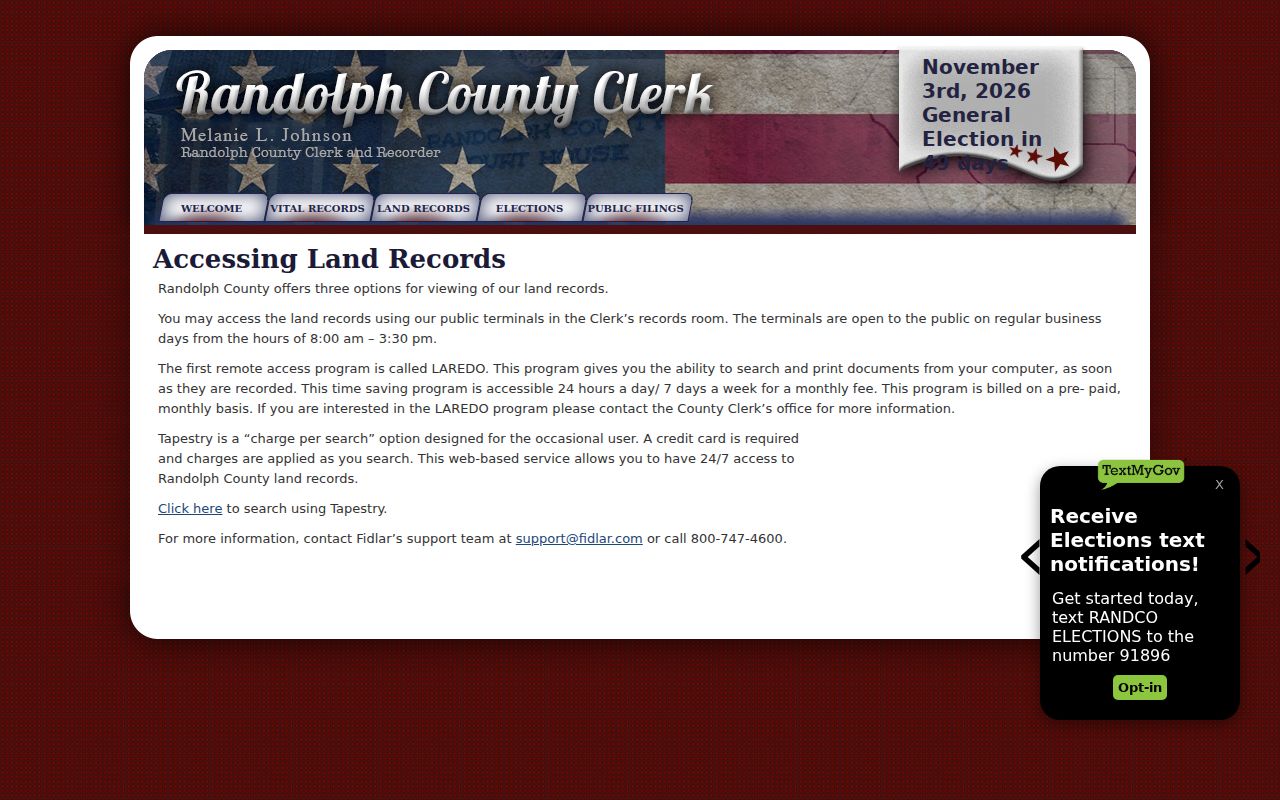
When a modern search stops at an index entry, or the online series stops short of the date you need, the terminal is the fallback that still works.
Randolph County Deeds on Fidlar Tapestry
Fidlar Tapestry serves occasional remote users on a pay-per-search basis. Its entry point sits apart from the county portal. The Clerk's instructions list Tapestry alongside LAREDO rather than presenting it as the sole online index. Hang onto whatever a result returns: party names, date range, legal description and book/page. Those details carry the search forward.
The screenshot links to the Fidlar Tapestry land-record entry point. It shows the remote access route, not a specific Randolph County deed image. A result may not yield the copy you need. Follow the Clerk's local office instructions.
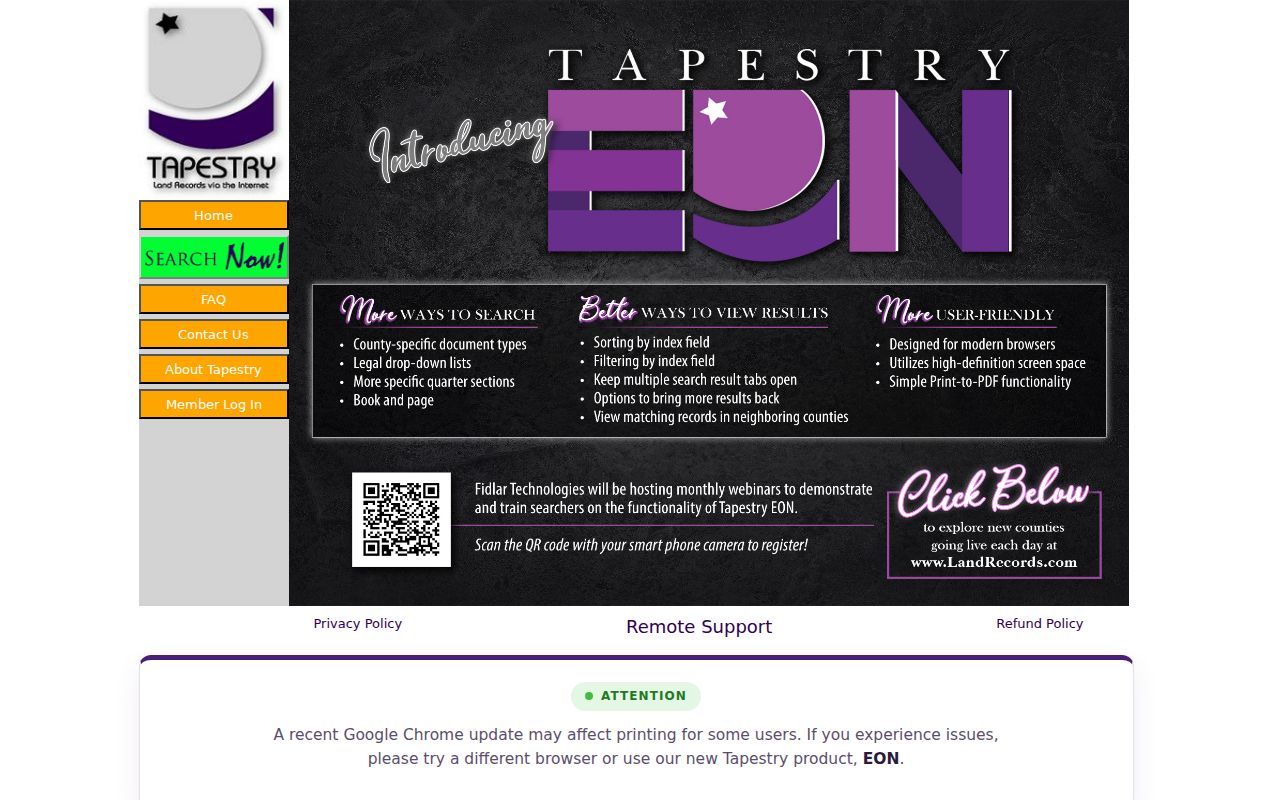
Remote access can save a trip. The courthouse terminal remains the county's named free public search option.
Randolph County's Older Index Needs Clerk Confirmation
Some Randolph records date to the late 1700s, the County Clerk reports. A library-hosted tutorial walks through a separate older-index workflow. Pick Grantor or Grantee, set a 1776–1947 date range, search the last name, and page through the index. Note the page number, then enter a book/page to view the document. That tutorial's system identity and its fit with Randolph's current online portal remain unconfirmed.
Treat the year range as a lead. It is not a promise that every deed from those years is online. Ask the Clerk which books and cutoff dates the current system covers. If a remote search stalls, the courthouse terminal or a direct request can reach an older volume. The deed itself, not the tutorial, is the evidence for parties and land description.
A sample assessment card ties Leadsville district, Map 0004 and "LOT 9 PT 10-B-4 DOERR ADD" to book 463, page 619. Keep those identifiers handy when requesting an older-index lookup. If an instrument describes a different lot or a partial tract, do not attach it to the chain on a name match alone. Compare the subdivision and legal wording too.
Read the Randolph County Grantor-Grantee Trail
A grantor gives up an interest. A grantee takes it. That pairing is the backbone of every Randolph County deed records search. Start with a recent deed naming the current owner as grantee. Then read who served as grantor on that instrument. Search that earlier party as a grantee next. Keep walking back one deed at a time. Hold the legal description in view throughout the chain. Matching a similar name or a nearby parcel will not safely join two records.
- Start with the assessment card's deed book/page or the owner's name as grantee.
- Read the recorded document for the grantor, grantee, date, instrument type and legal description.
- Search the grantor as a grantee and compare land wording before joining the next deed.
- Repeat until the online index ends; ask the Clerk about older books or terminal access.
- Grantor
- The person or entity named as conveying an interest.
- Grantee
- The person or entity receiving the recorded interest.
- Chain of title
- The ordered sequence of instruments that links prior conveyances.
- Book/page and instrument number
- Two reference styles used to locate a recorded document.
Recorded Deeds and Randolph Court Files
A recorded land instrument can point toward a case without holding the whole file. A lis pendens, a judgment, or a foreclosure deed may be indexed by the County Clerk. The complaint, order, and disposition usually sit with a court clerk instead. Randolph Circuit Court handles circuit and family matters. The statewide magistrate portal offers a free name or case-number search. It returns up to 30 results. A docket summary may list the filing date, charge, disposition, and a document indicator. You must obtain the documents from the filing county. For a property issue, search the party first. Then request the actual order or complaint from the right Clerk. The West Virginia Magistrate Record Search is a case-search entry screen. It is no substitute for a recorded deed in Randolph County property records.
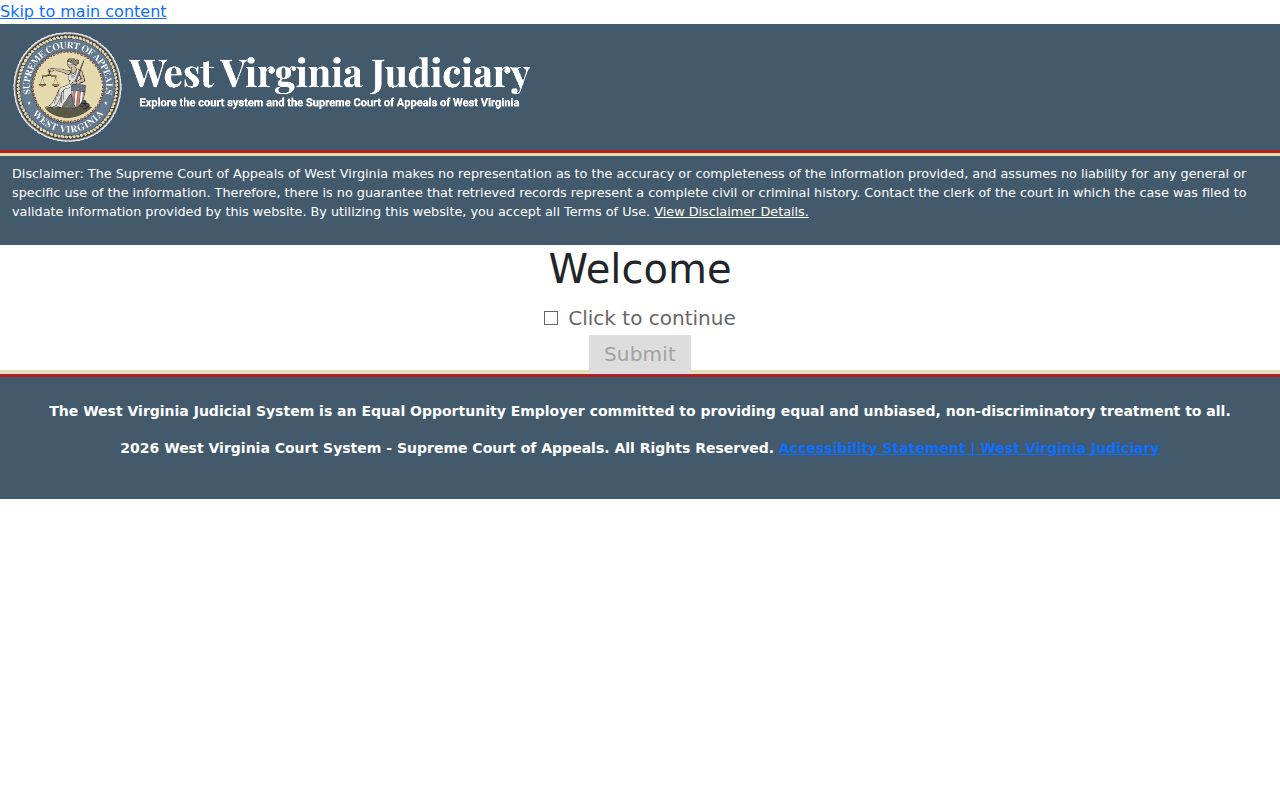
Never assume a court result changes the parcel record. Check the order or any later instrument first. The deed records only show what has actually been recorded.
Check Randolph County Releases Beside the Deed
A deed alone will not settle every encumbrance question. The County Clerk files more than deeds. Its Deeds and Liens groups hold deeds of trust, releases, satisfactions, mechanic's liens, tax liens, judgment entries, lis pendens, easements, rights of way, leases, UCC filings, and trustee sales. Start with the owner and legal description. Then run a second search on any lender, lien claimant, trustee, or release party named in an instrument.
A mortgage does not vanish just because a later sale deed is recorded. Check for a recorded release, satisfaction, or deed of reconveyance, and match its book/page or instrument reference against the loan. Keep in mind that a UCC filing never amounts to a full real-property title record. Delinquent tax questions belong with the Sheriff and the State Auditor. When an index entry points to litigation, pull the court disposition along with the land instrument itself.
Getting a Randolph County Deed Copy
Recorded deeds can be pulled three ways. Use the remote index if the image you need is there. A public terminal works too. Or contact the County Clerk for an office copy. The county publishes no current copy-fee schedule or mail-request price, so confirm costs before sending payment. Give the Clerk the grantor and grantee, an approximate date, the book/page or instrument number, and the legal description if you have it.
Recorded, not guaranteed. A Randolph County deed index reports instruments placed of record, not every possible interest or a legal conclusion about title. For a purchase or dispute, have the full chain reviewed by a qualified title professional.