
Trace Former Randolph County Property Owners
Build the chain backward, one deed at a time. Each transfer deserves a record of the date. Note the grantor, the grantee, the instrument type, and the book and page. Then check that the land description still points to the same parcel. The County Clerk serves as recorder for deeds, plats, liens, and estate instruments. Its public index supports searches by Individual, Firm, Book & Page, Instrument, Description, and Date Range. Expect interruptions. An estate, a name change, a trust, or a shifted legal description from a subdivision can each break the sequence. A sample assessment card's transfer table shows the fields to fill in. But grantor and grantee names come only from the recorded deeds themselves.
| Transfer date | Grantor → Grantee | Deed type | Book / Page |
|---|---|---|---|
| Latest verified deed date | Current grantee → prior grantor | Read from the instrument | Copy the Clerk reference |
| Earlier deed date | Prior grantee → earlier grantor | Read from the next instrument | Record each book/page |
| Estate transfer date | Estate/fiduciary party → grantee | Executor, administrator or related filing | Check Estates index |
Let the current Clerk index handle the recent stretch of the chain. When remote searching stops, ask about older deed books and index volumes. Plats and historical collections add helpful context, but they never replace the recorded conveyances.
Randolph County Deed Books Reach Beyond the Web Index
Some county records date to the late 1700s, according to the County Clerk. That describes the holdings. It does not describe the online coverage of every deed series. The county provides public terminal access. It also offers monthly LAREDO and pay-per-search Tapestry options. A remote index that returns nothing old is not the final word. Ask the Clerk which vault books or indexes cover the period first. Public terminals run on regular business days from 8:00 a.m. to 3:30 p.m. The Clerk's office keeps weekday hours of 8:00 a.m. to 4:30 p.m. Its land-record instructions walk through the terminal and remote options. The county's access page displays those same choices.
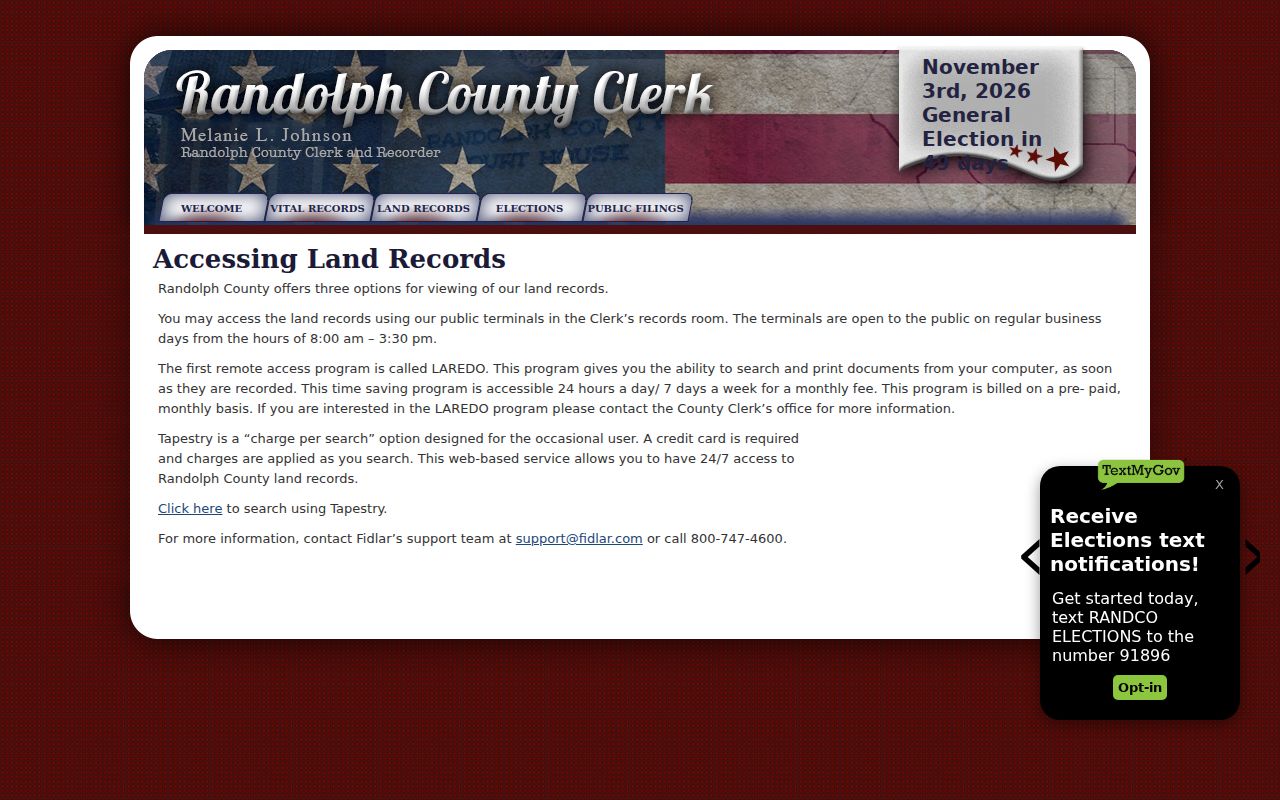
Ask for an older index reference or a book and page number. Repeated paid searches that cannot reach the needed year just cost money.
Verify the Old Randolph County Index Instructions
A library-hosted tutorial describes an old-index workflow built on grantee and grantor books. It covers a 1776 through 1947 date range, page-turn arrows, and a later book/page lookup. The county does not present that interface as its current system. Treat the years as a tutorial lead, not a firm online cutoff. Confirm the process and date span with the Clerk first. Even so, the general path holds up well. Identify the current grantee. Read the grantor from the deed. Then search that party as a grantee in the earlier period. Follow the legal description the whole way. Note spelling variants, initials, and entity names as you go. The Fidlar Tapestry entry point is the remote search channel the county names today. The older tutorial needs checking locally.

Never read a search cutoff or blank result as a deed gap. The record is only missing once the right older book has been checked.
Use Randolph County Legal Descriptions When Names Fail
Names fail more often than land descriptions do. Street spellings, route names, and family names all change across the decades. The Clerk's Description search accepts a tax map, subdivision, lot, block, township, quarter, section, town, range, and acreage. It covers every major element of a legal description. Compare that wording against the assessment card and the deed itself. A platted city lot usually appears as lot and block. A rural parcel more often relies on metes and bounds. Book/page and instrument number anchor everything. Search each party as both grantor and grantee when needed. Join a result to the chain only when the described land matches. A shared surname or a nearby street proves nothing on its own.
Estate Transfers in a Randolph County Ownership Chain
Not every prior owner sold the land. Some passed it through a will, a fiduciary order, an heir transfer, or an executor deed. The County Clerk's Estates category holds appraisement books and fiduciary bonds and orders. It also holds heir listings, letters of administration, settlements, small-estate filings, and wills. Copy down the index reference. Then ask for the underlying estate or court file when the index points beyond the recorded deed. A death certificate can support family research, but state eligibility rules apply. West Virginia Vital Registration charges a $12 search and copy fee for certified copies. Birth records stay confidential until they turn 100 years old. The state certificate-request page lays out mail, walk-in, and online channels. Its request instructions appear on that page.
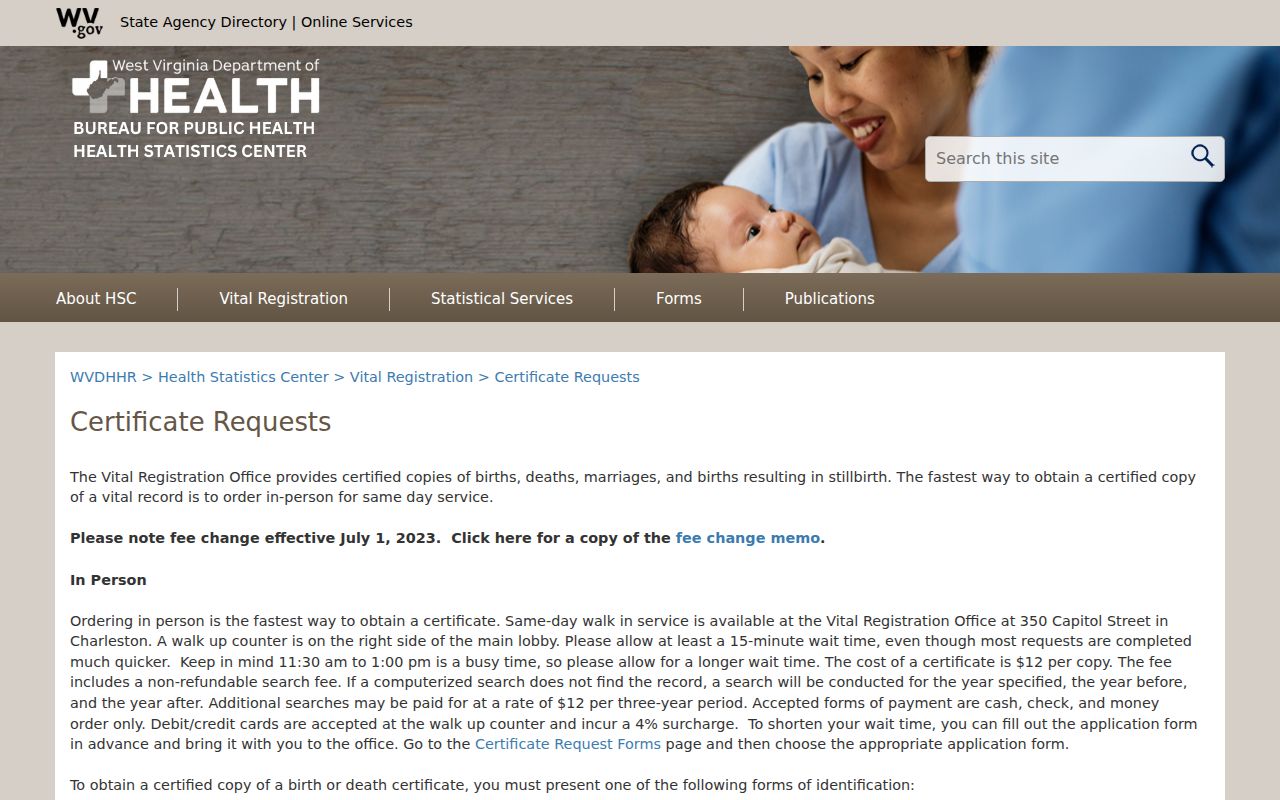
Use estate filings to explain how a transfer happened. Never infer that a named heir took title without a deed or court order.
Randolph County Libraries and Historical Records
Old deeds often raise questions a library can answer. The Elkins-Randolph County Public Library keeps local history accessible at its temporary Annex location. The Randolph County Historical Society preserves records from county businesses and individuals. Access is by appointment. Beverly material goes to the Beverly Heritage Center. The Allegheny Regional Family History Society adds a regional research library plus cemetery publications. Directory runs and obituary indexes vary. Ask before relying on a specific collection.
The image below links to the Elkins-Randolph County Public Library. A library can identify a historic street or family, but a filed deed or plat still proves the land transfer.
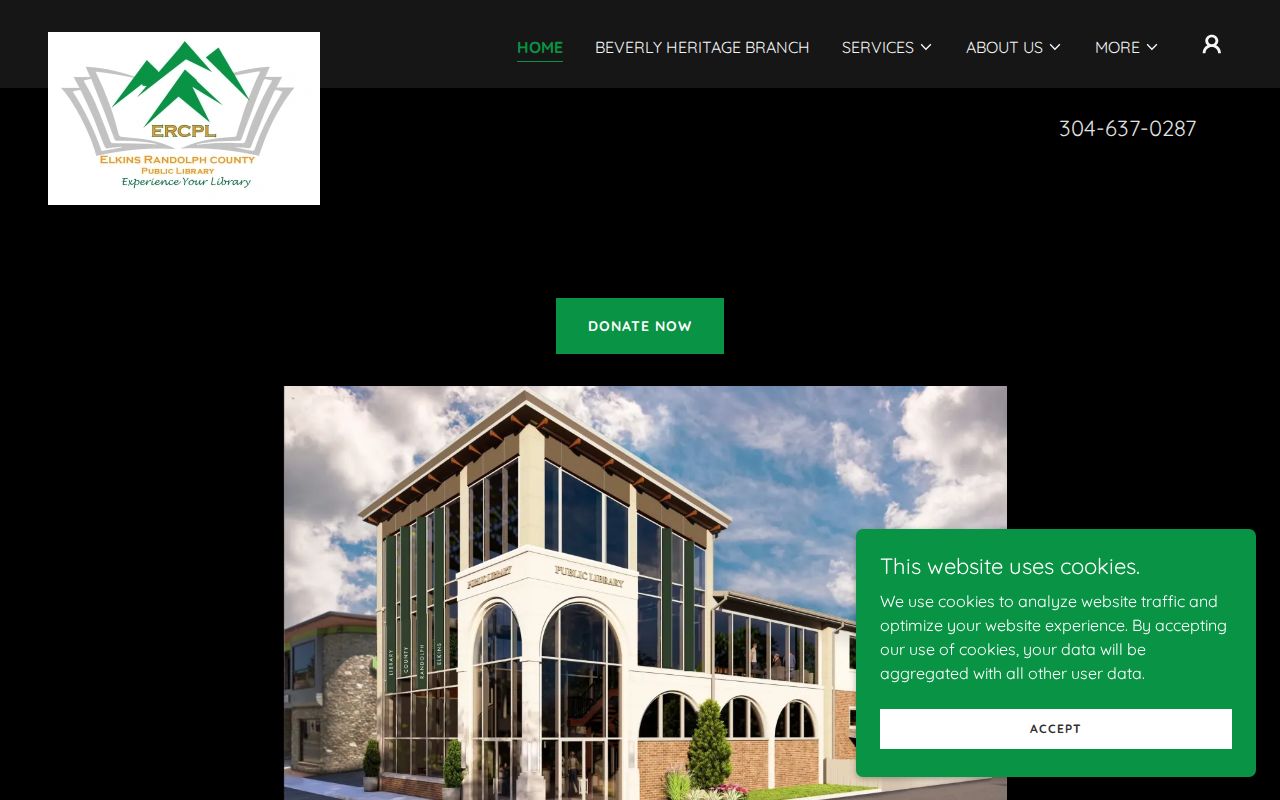
Write down each lead. Note the title, date range, and shelf number. Those details let you check the find against county property records later.
Genealogy that crosses a property chain leads to the Allegheny Regional Family History Society in the Randolph Lodge #116 IOOF Building on US 250 South in Elkins. Research hours run Wednesday 1–4 and Saturday 10–2, or by appointment, at 304-636-1650. Cemetery listings and area publications fill its shelves. Use them to build a lead. Then confirm any conveyance in the Clerk's deed or estate file.
Walking the Randolph County Deed Chain Backward
Start with the current assessment card. Copy the Parcel ID and the book/page reference. Find the latest deed naming the current party as grantee. That instrument gives you a grantor, a date, and a legal description. Search the grantor as grantee in the earlier index. Repeat, checking that each description covers the same tract. Randolph's Clerk reports records dating to the late 1700s, though the online index has no confirmed cutoff, so mark any gap for a courthouse-book search rather than guessing an owner.
- Search the current owner as grantee and save the deed book/page or instrument number.
- Read the instrument for its grantor, date and full legal description.
- Search that grantor as grantee and compare the land wording before adding a prior deed.
- When the online series ends, ask the Clerk about the older index books or terminal records.
- Grantor / grantee
- The party conveying an interest and the party receiving it.
- Chain of title
- The ordered sequence of recorded instruments for the same land.
- Legal description
- The parcel wording used to test whether two deeds belong in one chain.
How Far Back Randolph County Ownership Records Go
Some records reach back to the late 1700s. The county publishes no single confirmed cutoff. No fixed date closes its online deed index. A library tutorial cites a 1776–1947 span, but the Clerk's own books are the authority. Ask which books, index pages, or images cover your year. A deed may point to probate, a court case, or a plat. Follow that file as its own link in the ownership chain.
Lawful use. Use prior-owner records for house history, estate work and property diligence. Never use a chain search to track, harass or harm a living person.